A professional pest control service in Calhoun protects residential structures and commercial facilities from the health hazards, insulation fouling, and structural wood decay caused by regional pests. Local infestations in Gordon County stem from dense river basins and mature timber stands that channel subterranean termites, roof rats, house mice, and wood-destroying insects directly into unsealed attics and crawlspaces.

Pest Control Service in Calhoun is a specialized biological management and structural defense system that eliminates active insect and rodent colonies while mechanically sealing building envelopes against future biological intrusion.
Every service reflects the same meticulous attention to detail — whether it's a single job or a larger pest control service project across Calhoun.
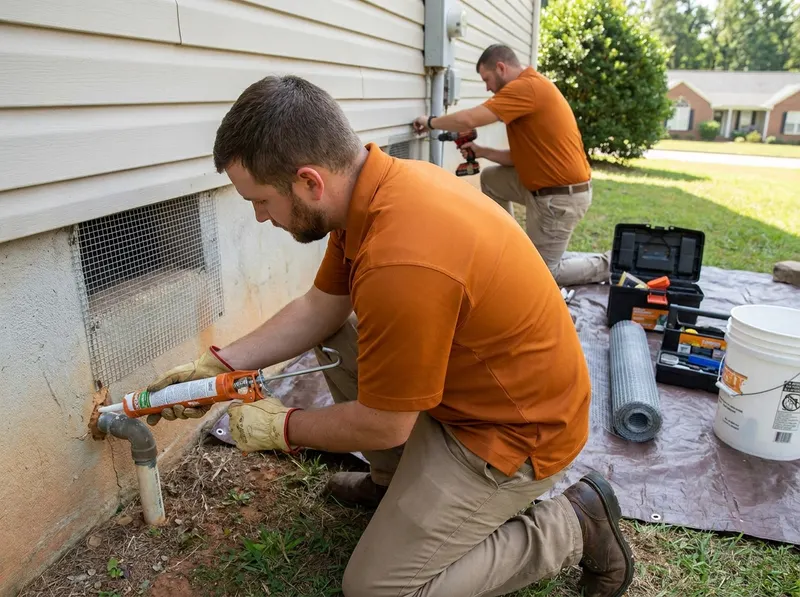
Permanent mechanical sealing of residential and commercial building envelopes against rats, mice, and squirrels. Technicians conduct exhaustive audits of roofline transitions, fascia intersections, ridge vents, crawlspace access hatches, foundation penetrations, and siding gaps. Every structural vulnerability is fortified using heavy-gauge 1/4-inch galvanized steel hardware cloth, copper mesh, metal flashing, and UV-resistant elastomeric sealants. Unlike superficial baiting programs that leave structural entryways open to subsequent rodent migrations, mechanical proofing creates an impenetrable physical boundary that denies biological access while eliminating the danger of pet exposure to toxic anticoagulants and preventing carcass decomposition inside wall voids.
View details →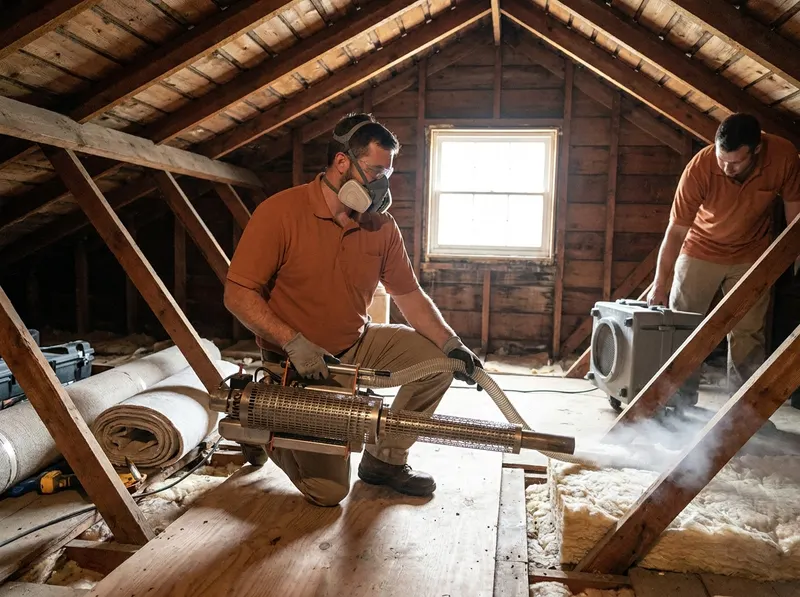
Complete biological extraction, virucidal sanitization, and thermal restoration of attics fouled by rodent urine, pheromone trails, and fecal accumulations. Technicians isolate the living space using negative-air containment and extract compromised fiberglass or blown cellulose insulation through commercial-grade HEPA vacuum ducting to prevent airborne zoonotic pathogens from entering living areas. The entire attic framing structure is misted with an EPA-registered hospital-grade antimicrobial and virucidal agent to neutralize hantavirus, roundworm eggs, and lingering attractant scents. Technicians then install premium borate-treated cellulose insulation to restore optimal thermal resistance (R-38 to R-49 values) while providing built-in insect-deterrent properties.
View details →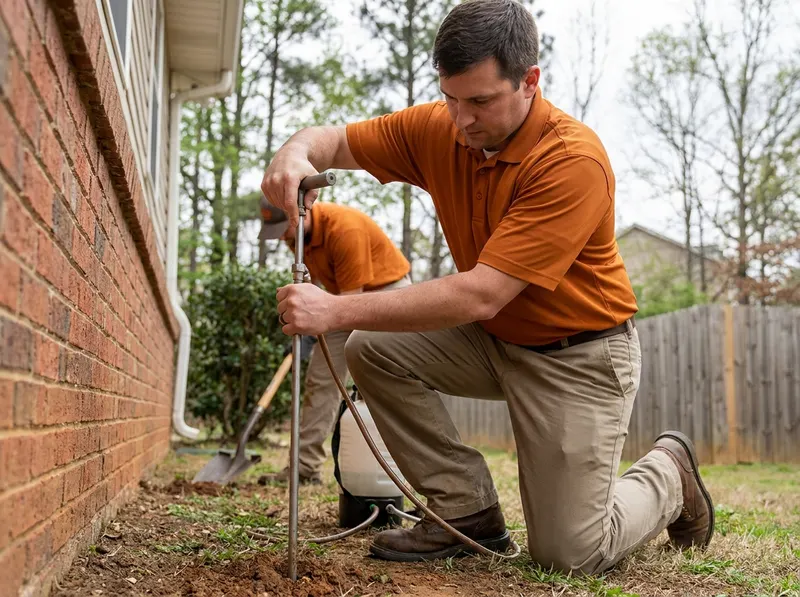
Comprehensive structural protection defending foundation sill plates, structural studs, and subfloors against subterranean termite colonies. Treatments establish a continuous non-repellent chemical envelope via perimeter soil trenching, foundation rod injection, and targeted slab drilling along expansion joints to achieve total colony elimination. Technicians trench continuous trenches along foundation perimeters, saturate structural backfill with non-repellent liquid termiticides, and apply vertical soil rodding around plumbing chases. Foraging worker termites traverse the treated zone without detection, transferring the active ingredient throughout the subterranean colony to eliminate the reproductive core and stop structural degradation.
View details →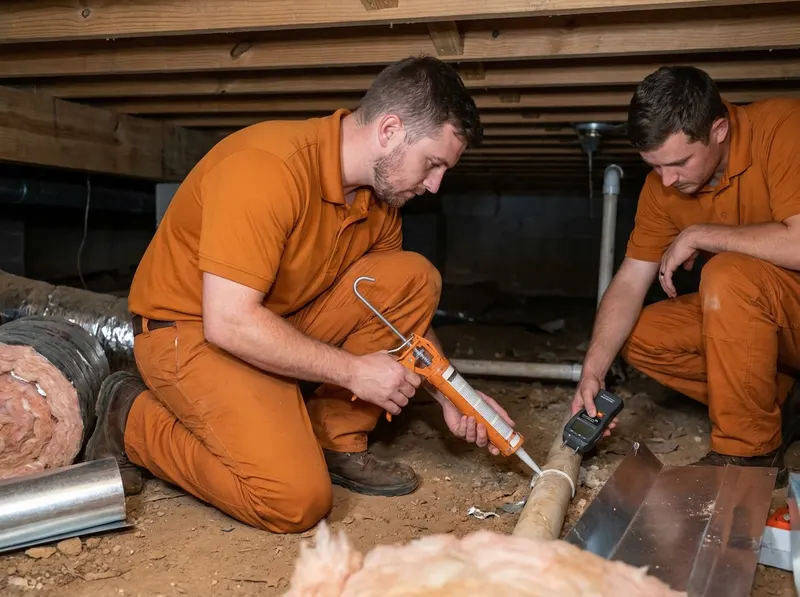
Targeted remediation of crawlspace microclimates that attract wood-boring beetles, subterranean termites, and dampwood pests. Technicians clear biological debris and contaminated organic matter from soil surfaces, treat structural floor joists and subflooring with disodium octaborate tetrahydrate to eliminate wood-destroying fungi and beetle larvae, and install reinforced 12-to-20-mil puncture-resistant vapor barriers across exposed ground. Foundation vents are fitted with corrosion-proof steel mesh to halt rodent passage while crawlspace access doors are gasket-sealed against moisture vapor, stabilizing structural timber moisture levels below fifteen percent to prevent insect colonization.
View details →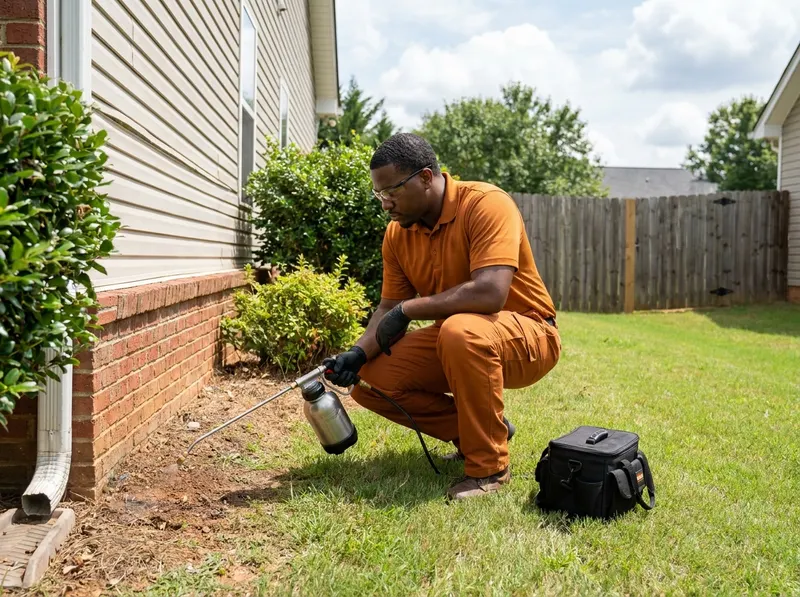
Scheduled exterior structural maintenance designed to suppress perimeter pest pressure before insects infiltrate interior walls. Technicians sweep exterior eaves, window soffits, and porch ceilings to eliminate spider webbing and stinging insect nests, treat foundation perimeters with slow-release micro-encapsulated formulations, and clear botanical debris bridges. Technicians apply a three-foot vertical and five-foot horizontal protective barrier around the structure's base, target utility penetrations and window lintels with water-resistant granular applications, and inspect exterior perimeters for newly emerged entry vectors, maintaining continuous defensive integrity through seasonal weather fluctuations.
View details →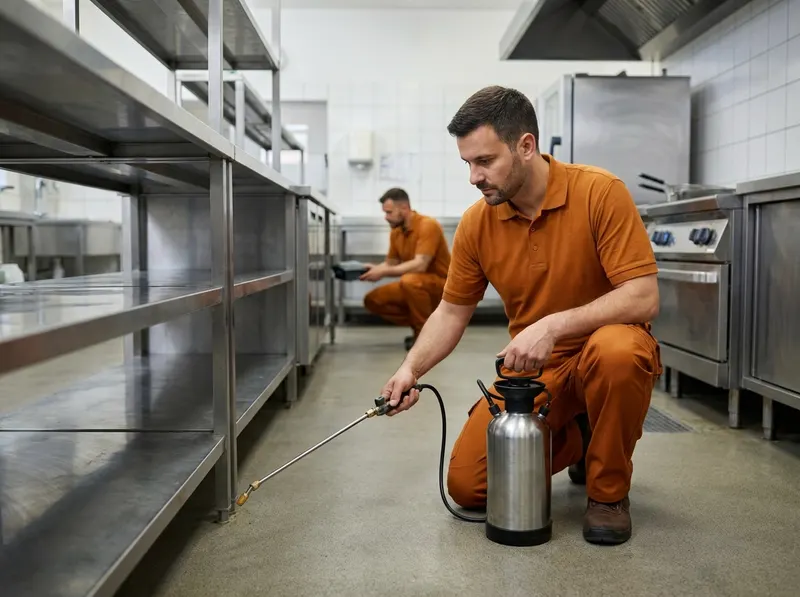
Clinical pest defense programs tailored for food processing plants, logistics warehouses, retail centers, and medical offices. Incorporates mechanical bar-code-monitored interior trapping stations, exterior tamper-resistant bait perimeters, non-toxic monitoring protocols, and comprehensive health department compliance documentation. Technicians establish clear sanitation action thresholds, conduct structural dock-door gap audits, inspect pallet storage zones for stored-product pests, and deliver detailed digital audit trails compliant with FDA, USDA, and OSHA regulatory standards to protect commercial property assets from contamination and operational downtime.
View details →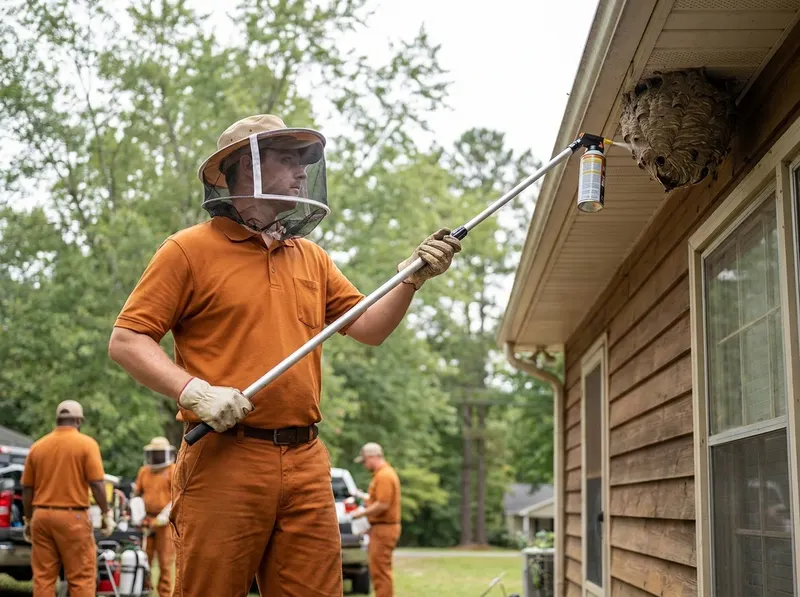
Rapid neutralization and physical extraction of aerial and subterranean stinging insect colonies. Technicians eliminate bald-faced hornet nests, yellow jacket ground cavities, paper wasp clusters, and carpenter bee galleries from eaves, fascia boards, and porch framing using targeted non-broadcast residual compounds. Nest structures are mechanically removed from the premises, void access holes are filled with insecticidal dust formulations to neutralize returning foraging insects, and entry apertures are sealed with wood filler or metal flashing to prevent future colonization by rival queens.
View details →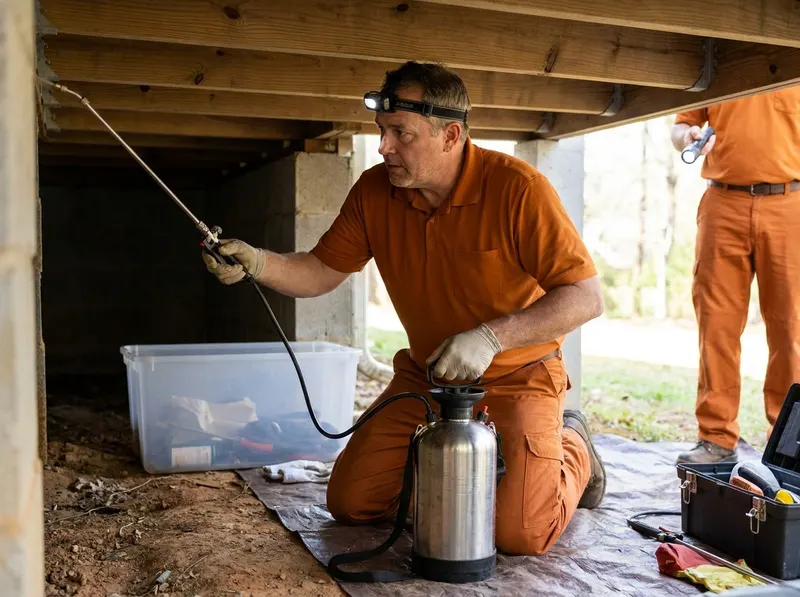
Focused tactical intervention designed to eradicate specific acute pest outbreaks inside residential or commercial properties. Targets severe localized populations of German cockroaches, fleas, silverfish, or pantry beetles using direct void injection, growth regulators, and insect-specific attractant baits. Technicians utilize targeted micro-application tools to deposit non-volatile gel baits and juvenile hormone analogues directly into structural wall voids, cabinet hinge recesses, and baseboard junctions, halting insect reproduction cycles without broad chemical drift across family living quarters.
View details →Pest Control Service in Calhoun is a specialized biological management and structural defense system that eliminates active insect and rodent colonies while mechanically sealing building envelopes against future biological intrusion.
You get a firm, itemized quote for your pest control service before any work begins — no surprises, no pressure.
Careful prep, tidy work, and a full cleanup when we are done. We treat your home and belongings like our own.
The same trusted, background-checked team from the first call to the final check.
Selecting the proper defense strategy depends on pest biology, structural construction type, and the severity of physical damage within the building envelope. If you hear scratching noises in your ceilings between dusk and dawn, choose structural rodent exclusion combined with mechanical trapping rather than open rodenticide baiting. Rodents compromise fiberglass insulation and gnaw on electrical wiring, creating immediate fire hazards and biological air contamination; setting surface-level bait boxes without sealing exterior roofline voids merely poisons individual animals that then die inside inaccessible wall cavities, releasing noxious odors and attracting secondary carpet beetle infestations. If your foundation exhibits mud tubes or swarmer emergence near baseboards, choose a continuous subterranean liquid termiticide barrier over localized spot injections. Spot treatments leave untreated soil gaps beneath slab expansion joints, allowing subterranean worker termites to bypass chemical zones and feed directly on structural sill plates, whereas full perimeter trenching creates a continuous non-repellent envelope that foraging termites transfer back to the reproductive queen for complete colony collapse. If you manage recurring indoor ant trails or perimeter moisture invaders, choose quarterly micro-encapsulated exterior perimeter treatments rather than broadcast interior aerosol sprays. Exterior barrier applications stop foraging insects at foundation wall perimeters, weep screeds, and window lintels before they establish interior nesting networks, eliminating the need to disperse synthetic chemical compounds across living zones, food preparation surfaces, and pet contact areas. If your crawlspace displays fungal growth, elevated wood moisture content above nineteen percent, or active wood-boring beetle frass, choose comprehensive crawlspace encapsulation and localized borate wood treatment over superficial ground dusting. Encapsulation isolates the structural subfloor from soil moisture evaporative load and fungal spores, whereas surface chemical dusts fail to arrest structural rot or prevent subterranean wood penetration. The primary trade-off across all structural defense methods centers on upfront capital investment versus long-term building durability: mechanical exclusion and complete thermal decontamination carry a higher initial investment than recurring cosmetic sprays, yet exclusion permanently stops biological entry and eliminates recurring structural repairs.
Every project gets a firm, written price after a free on-site visit. Ranges below for orientation.
Tell us about your pest control service job and we'll send a clear, written quote — usually the same day. Or just call and talk to a real Calhoun pro.

Calhoun's position within the Oostanaula River basin and proximity to agricultural lowlands create distinct pest dynamics across Gordon County. Heavy seasonal humidity along the river corridors accelerates timber rot in older crawlspaces throughout Meadowbrook and Riverview, attracting subterranean termites and wood-boring beetles into structural floor framing. The transition zones between dense hardwood timber stands and newer residential subdivisions in Blackwood Springs and Devonwood push wild rodent populations into residential rooflines as temperatures drop each autumn. Along the Highway 53 and Highway 41 transportation corridors, commercial transport hubs and residential developments experience sustained pest migration from surrounding agricultural fields and forested ridges near Salacoa Creek Park and the New Echota Historic Site. Furthermore, the limestone topography and dense red clay soils native to Gordon County create localized subterranean moisture retention zones around foundation footings in neighborhoods like Barrett Place, College View, Thornwood, Oakleigh, and Petersburg. This persistent soil dampness establishes optimal nesting grounds for eastern subterranean termites and moisture-dependent insect species. When winter frosts arrive across northern Georgia, local wildlife and rodent vectors seek immediate thermal refuge inside unsealed attic spaces, chewing structural wiring and contaminating attic insulation. Mechanical structural exclusion directly mitigates these geographic challenges by physically separating Calhoun living spaces from native biological pressure, delivering lasting building envelope integrity without over-reliance on recurring chemical saturation.
 Denvora Rodent Control